Pursuit OCR
Building a Digital Racing System to Encourage Retention and Increase Replayability
Role
UX Designer
Type
Academic
Timeline
12 Weeks
Tools
Figma/Figjam, Google Meet.
Methods/Activities
Literature Review, Competitive Analysis, Observational Research, Wireframing, High-Fidelity Prototyping, Usability Testing.
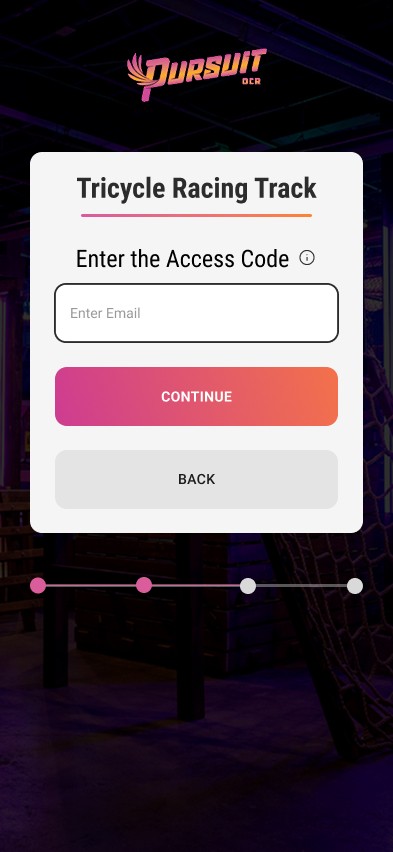
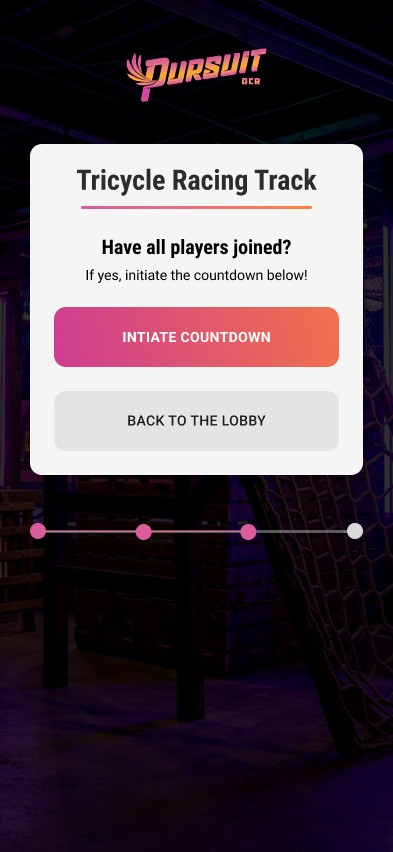
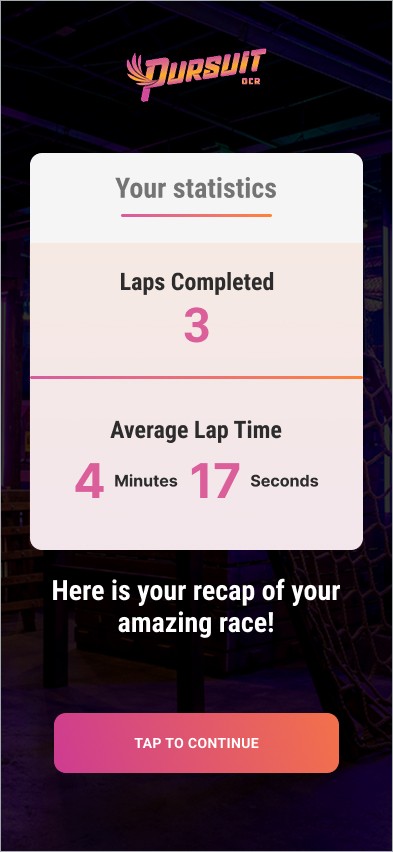
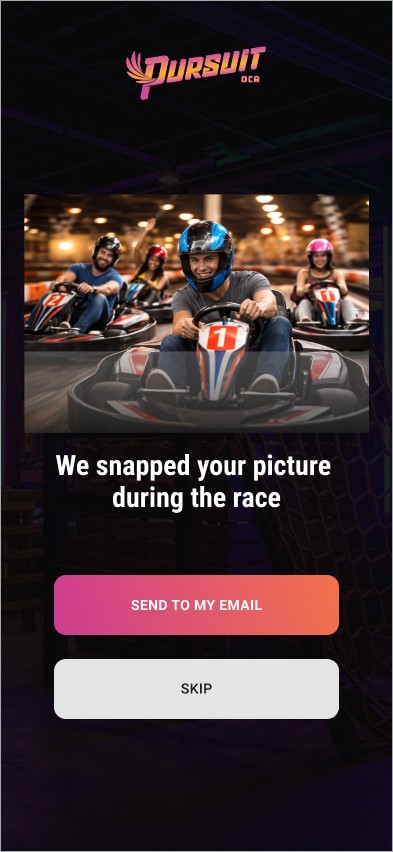
Project Brief & Problem Statement
Project Brief
"Pursuit OCR is Canada’s largest indoor playground and obstacle course, spanning 33,000 square feet. Its primary attraction is a large-scale obstacle course designed for adults, accompanied by a racetrack with paddle bikes and a secondary zone, and the Arena, of which is currently being transformed into an e-sports space.
The experience is welcoming to athletes and non-athletes alike, offering an introduction and on-ramp for those transitioning into more active lifestyles. While the physical environment provides a unique and memorable experience, it lacks replay ability—each visit feels the same because the physical obstacles cannot change dynamically.
The opportunity lies in exploring digital, interactive, and story-driven layers that can refresh the experience, streamline necessary processes (onboarding, liability, safety), and extend the sense of engagement beyond the physical visit."
Problem Statement
We want to address the lack of local community awareness and engagement at Pursuit, seasonal lows, and lack challenge-based features that foster retention for the local surrounding community and creators based in the GTA, aged 15-35.
We aim to solve this by implementing challenge-based leaderboard games and memorable attractions to achieve a sense of competitiveness, and to foster relationships between community members, incorporate broadcast functionality to attract new clients; and re-position Pursuit as a community-driven hub where creativity, competition, and play come together, supported by shared experiences and tangible takeaways.
Discovery Research
Site Visit
The first activity conducted was a site visit to Pursuit OCR. Where we observed the following themes:
Weak local awareness & SEO is not bringing in a consistent stream of new guests. This is critical because the business model unsustainably relies on new guest acquisition
Currently, the business targets one-time and casual guests, friend groups, and dates, forming a retention gap.
The space encourages exploration and play, rather than a challenge-based features, making any data tracking solutions difficult to seamlessly implement without operational overhaul. Further, this format discourages replayability; directly affecting guest retention.
Literature Review & Competitive Analysis
After completion of a literature review and a competitive analysis, we brought the following insights into the framing of our problem:
Canadian fitness is becoming data-driven and hyper-personalized. And, retention in these spaces is driven by progress-tracking.
The Canadian amusement industry is adopting virtual/augmented reality and immersive/interactive attractions to differentiate from home gaming competitors.
"it is the transformation of data into meaningful feedback that is a crucial factor for behavior change" (Stragier et al., 2016)
"Fitness clubs respond to these trends by offering integrated digital solutions…facilities implementing these apps have seen member retention rates increase by up to 25.0%, demonstrating the measurable business impact of digital adoption." (IBIS World)
Ideation & Prototyping
Wireframes
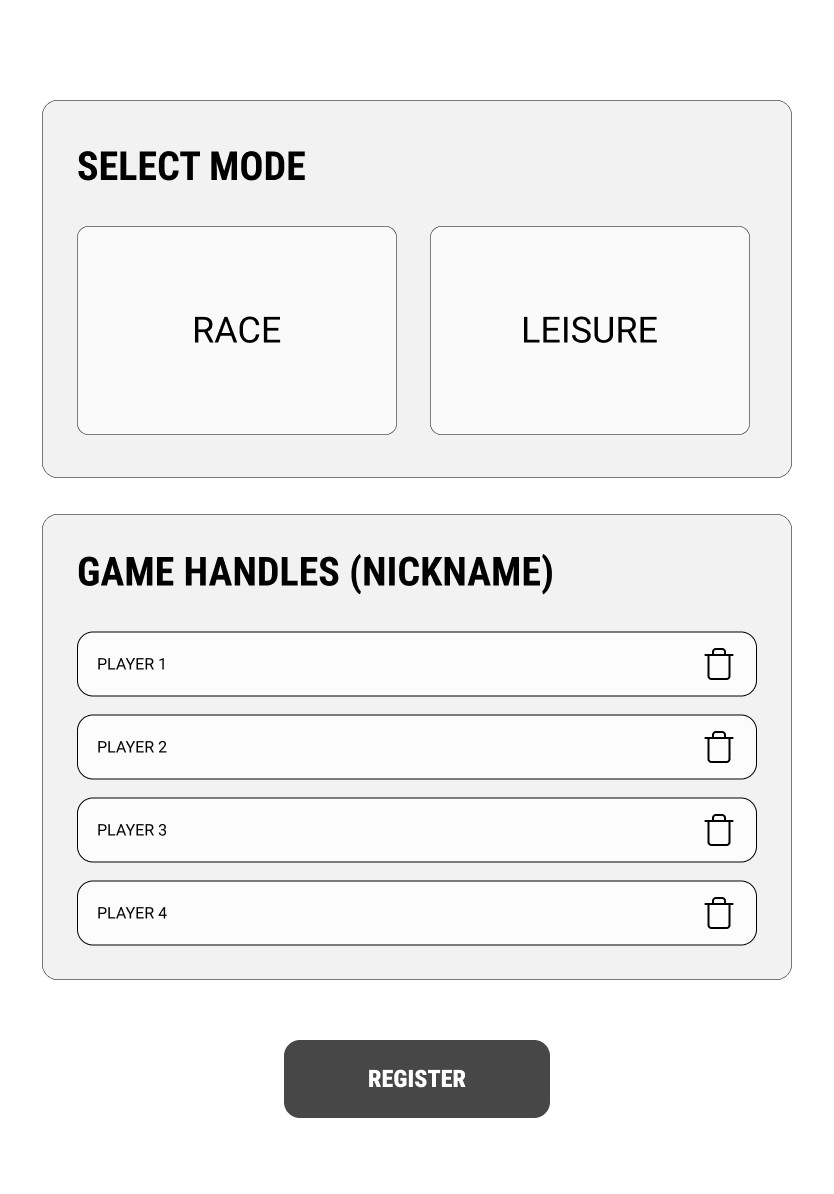
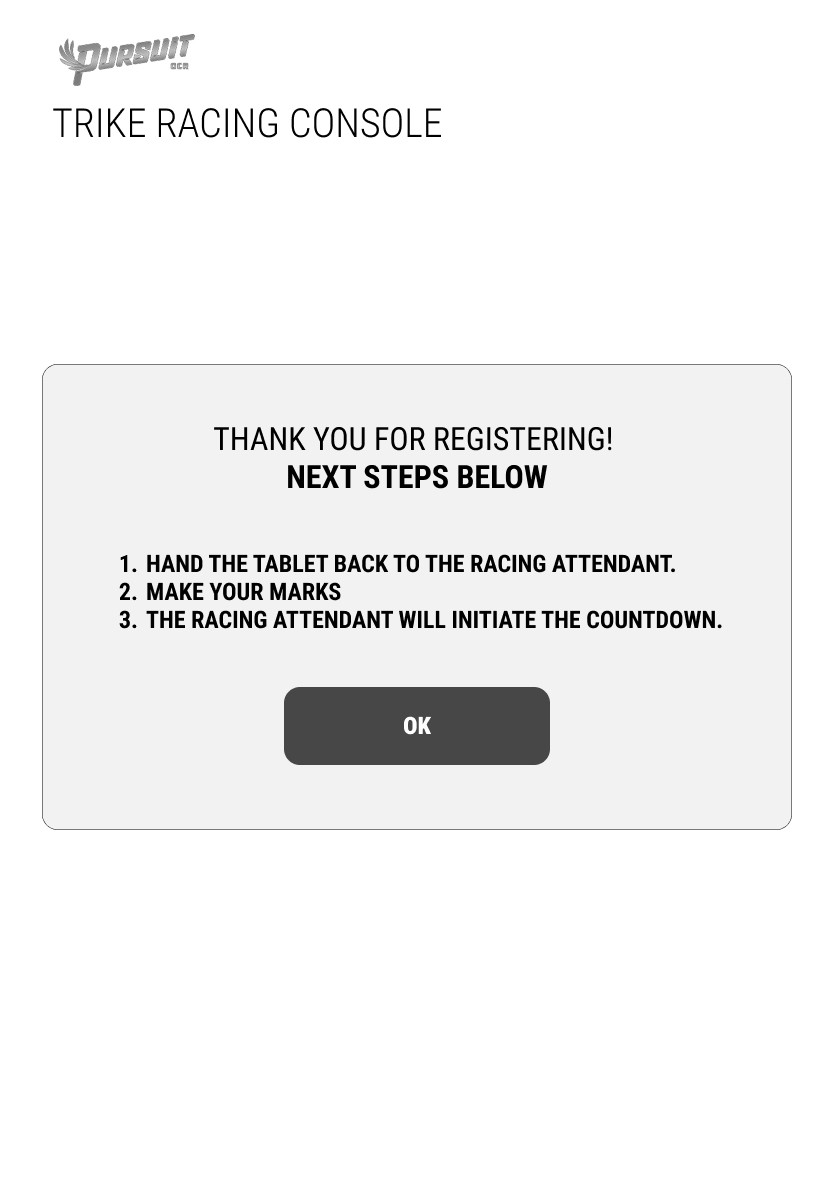
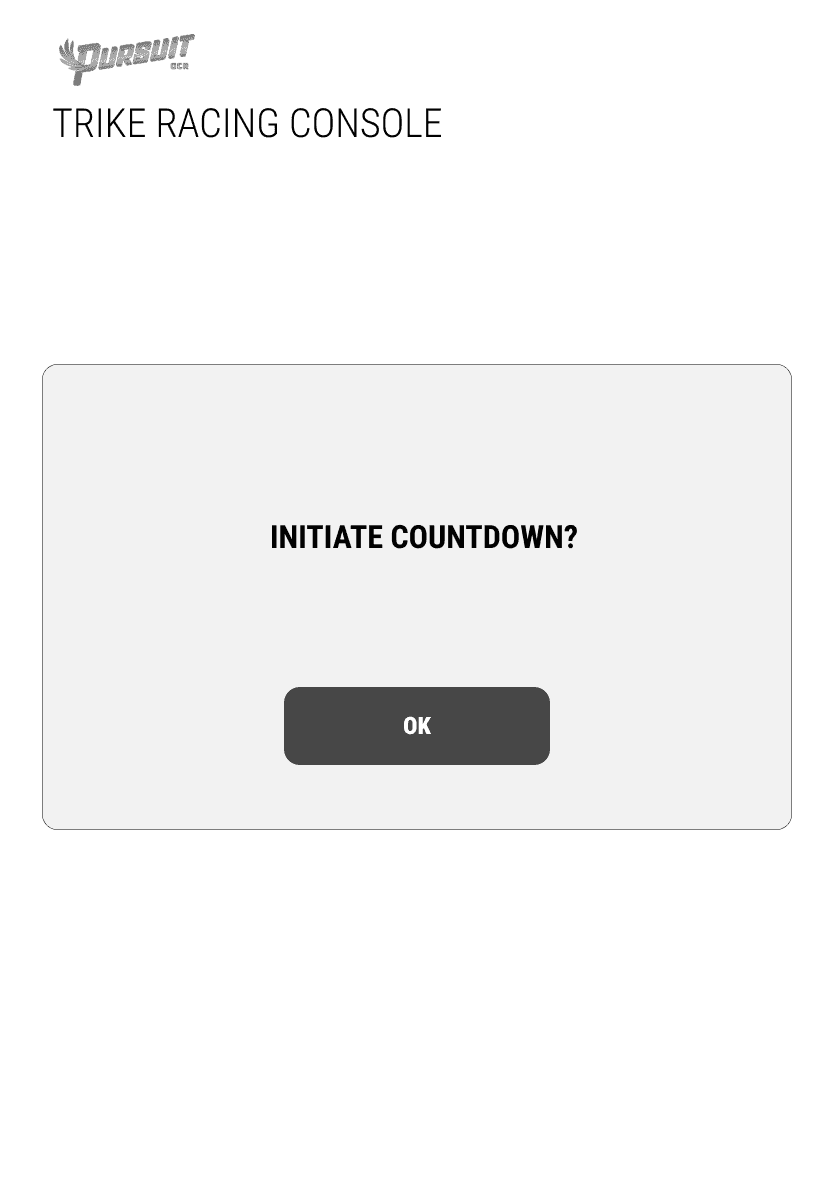
Mid-Fidelity
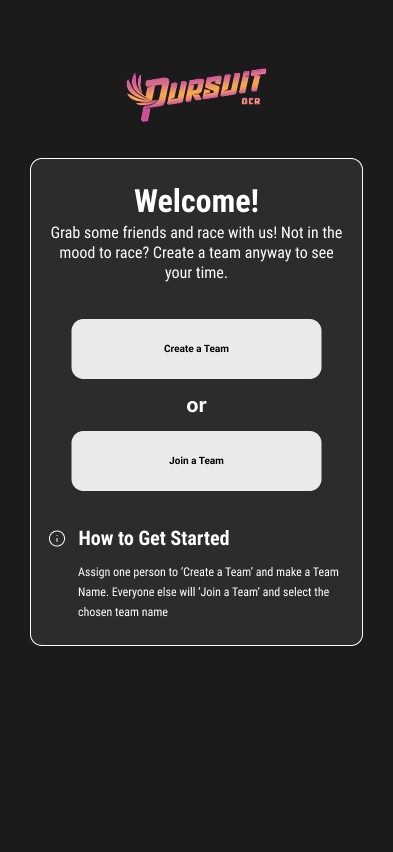
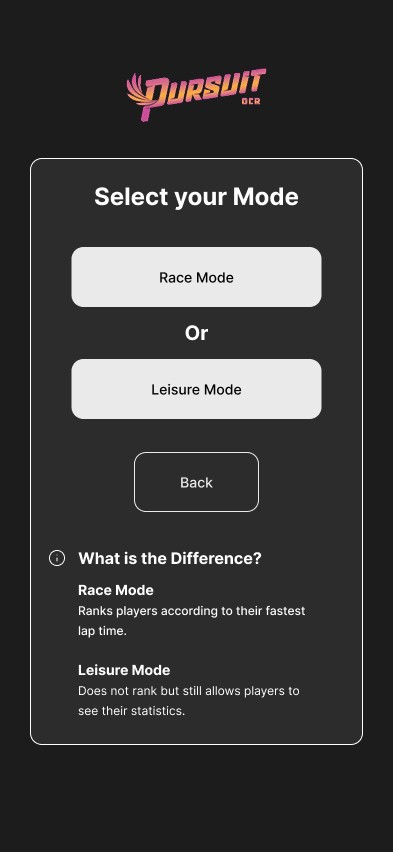
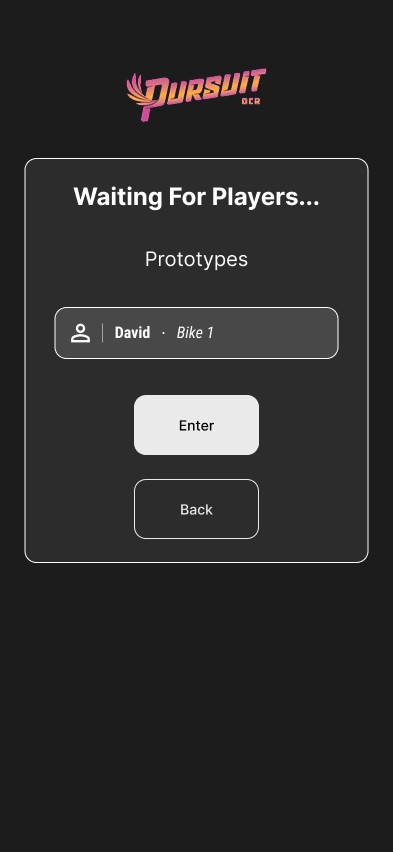
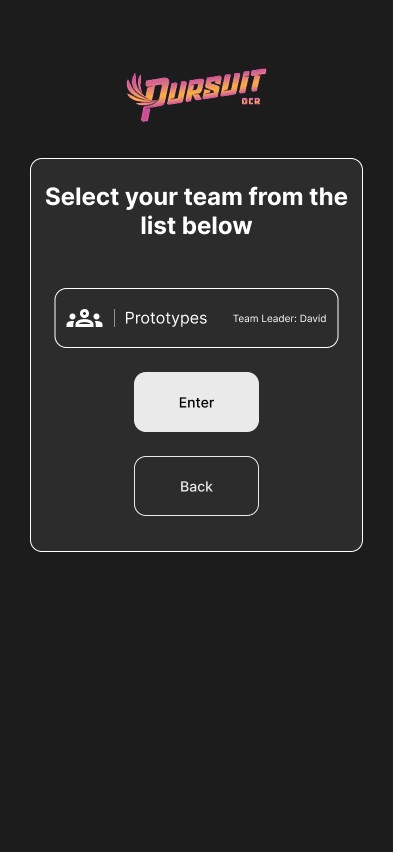

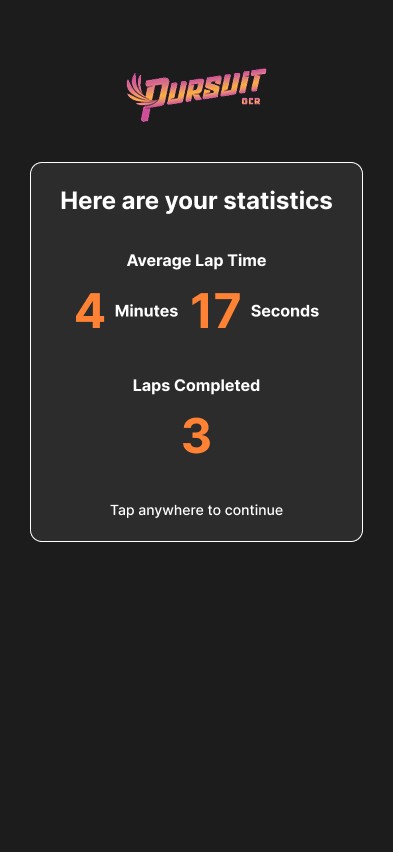
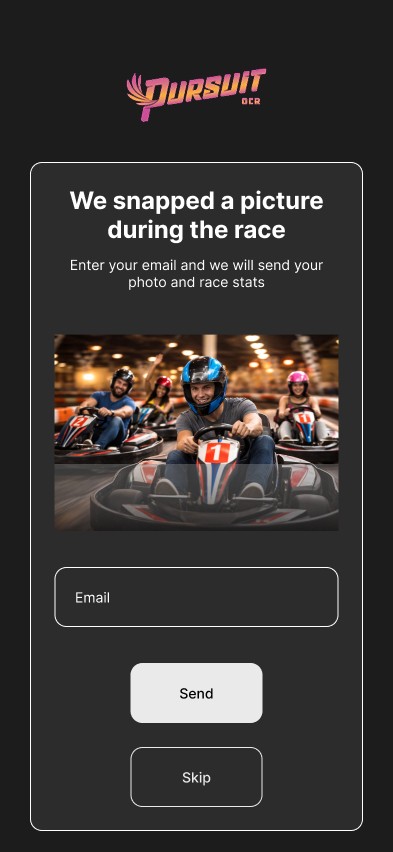
Testing & Iteration
We conducted moderated usability tests with 5 participants and found 3 priority usability issues:
Users felt they did not receive adequate feedback at key transition points or while waiting in queues, leading to confusion. And, the countdown on the leaderboard caused hesitation because there was no feedback to the waiting team and no visual cues, confirmation, or progress indicators.
Users could complete the tasks easily, but often did not fully understand what they were doing or what was happening next, leading to the partnership skipping instructions or misunderstanding transitions between actions, which led to unclear expectations after the first task.
A percentage of our users did not understand how the digital interface would be implemented in the physical space of Pursuit OCR. Specifically citing that while the digital interface was straightforward, they do not know “how race mode” would translate into real action.
From here we made an implementation list for our high-fidelity prototype:
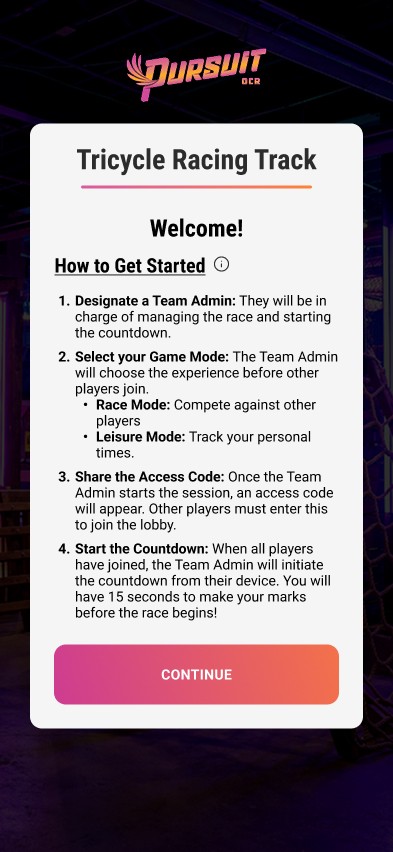
Include a dedicated onboarding screen with instructions
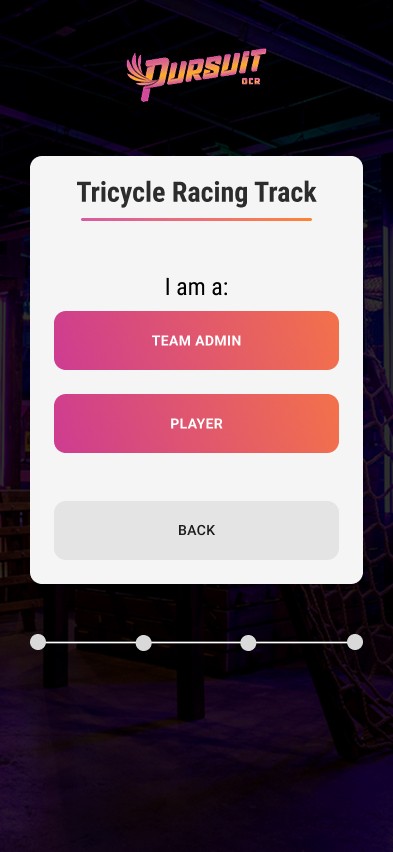
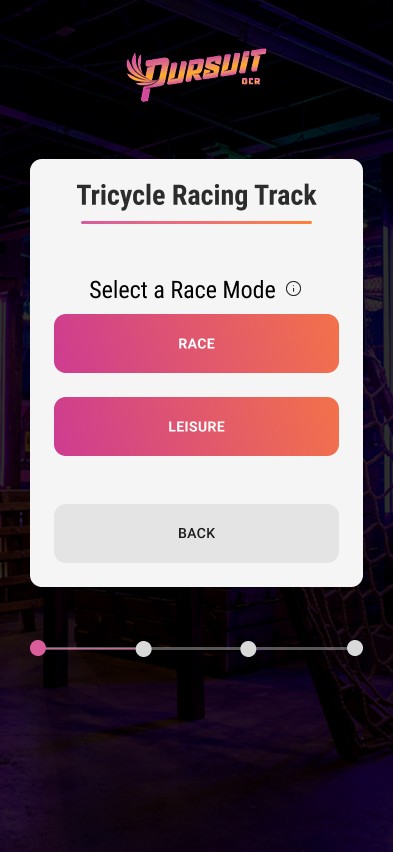
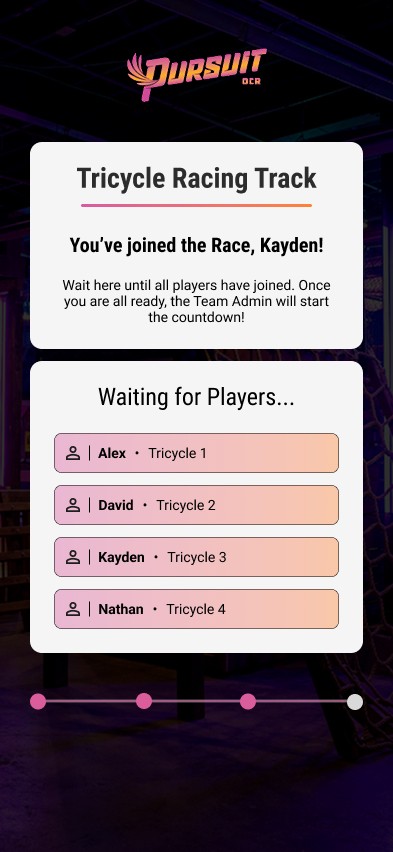
Add a progress bar into the registration flow.
Adjust terminology (ie. Race Mode/Leisure Mode)
Add confirmation pop-ups when actions have been completed successfully.
“I wasn't sure what 'race mode' meant.”
“Not sure how the digital combines with the physical”.